

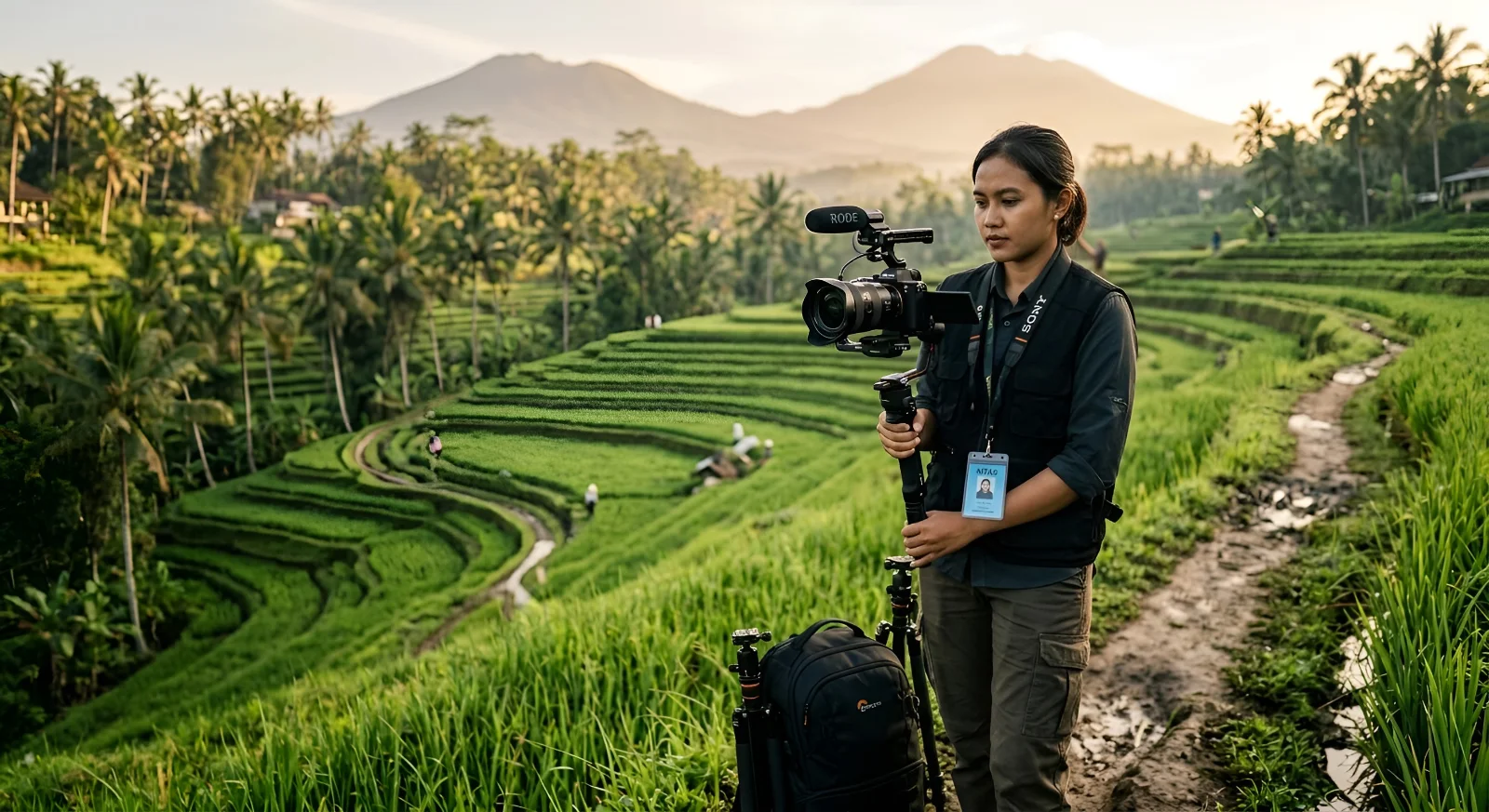
Bali is one of the easiest places on earth to fall in love with on camera. Rice terraces, surf breaks, villas with infinity pools, and a creative community that never seems to sleep. But if you are planning to hire a videographer in Bali, the question is no longer only "who has the best showreel?" In 2026, a second question moved to the front of the line: is the person holding the camera legally allowed to work here?
This guide is for villa owners, hotel and restaurant managers, expat entrepreneurs, course creators, and brands who want to hire a Bali videographer without nasty surprises. It explains what has been happening, why it matters to you as a client, and how to choose a crew you can rely on. For a deeper look at picking someone dependable, see how to choose a trusted freelance videographer in Bali.
What changed in Bali in 2026
Through the middle of 2026, several travel and photography outlets, including PetaPixel and What's New Indonesia, reported that immigration authorities in Bali were stepping up checks on foreigners who work on tourist visas or visa on arrival. A dedicated patrol team nicknamed the "Dharma Dewata" task force was widely mentioned, and the coverage focused on hotspots such as Canggu, Ubud, Seminyak, and Uluwatu.
The part that caught the creative world's attention was how "work" is interpreted. According to these reports, activity can be treated as commercial even when no money changes hands. Sponsored posts, free stays in exchange for content, and portfolio shoots for a business can all fall into that bucket, because the business receives promotional value.
A caution is worth stating plainly. Most of this coverage relies on secondary reporting, and figures and dates differ from one article to the next. Treat the details as a signal of direction, not as legal advice, and confirm the current rules with Indonesia's Directorate General of Immigration or a licensed immigration consultant.
Why this matters to you as a client
It is tempting to think visa rules are the freelancer's problem. In practice, they can land on your project too.
- Delivery risk. If a visiting creator is questioned or has to leave suddenly, your footage, raw files, and launch date can disappear with them.
- Reputation risk. A villa or restaurant that publicly promotes a project made through a barter arrangement may attract the wrong kind of attention.
- Quality and continuity risk. Visitors on short stays rarely know local light, traffic, ceremony calendars, or permit etiquette. A resident knows when the road to Uluwatu becomes impassable and which week the rains make drone days unreliable.
- Support risk. Revisions, reshoots, and archive requests are simple when your videographer lives down the road. They are painful when they are on a different continent.
The simplest way to remove all of this is to work with a videographer who is based in Bali, operates as a proper local business or freelancer, and can issue clear invoices and agreements.
A quick word on the visa options
Foreign creators have a few routes in theory. A work-authorized stay such as a KITAS tied to a sponsor is the long-term path. A separate short-term content creator visa, often called C5A, has been discussed in guides, but at least one visa service reported in November 2026 that Indonesian immigration described it as still under review as of August. Rules like this change quickly, so it is not something to assume.
As a client, you do not need to become an immigration expert. You only need to ask the right questions, which brings us to the checklist.
How to vet a videographer in Bali: a practical checklist
1. Ask where they are based and how they operate
A resident videographer will happily tell you where they live, how long they have worked in Bali, and what kind of entity invoices you. If answers are vague, keep asking.
2. Look for relevant, recent work
A showreel is a start, but you want proof for your own category. A villa needs different skills from a showroom, and an online course needs different skills from a restaurant launch. Ask for full-length pieces, not only a 30-second montage.
3. Clarify exactly what you get
Good proposals specify the number of finished videos, durations, formats (horizontal for YouTube and websites, vertical for Reels, TikTok, and Shorts), the number of revision rounds, and who owns the raw footage. Put it in writing.
4. Confirm equipment and backup
Ask about camera bodies, stabilization, audio gear, lighting, and what happens if something fails on shoot day. Professionals carry redundancy and are comfortable explaining it.
5. Discuss permits and locations early
Drones, beaches, temples, and some public areas can involve rules or local etiquette. A local professional will raise this before you do.
6. Agree on a transparent payment structure
A written quote, a deposit, and a final invoice are normal. Be cautious about arrangements built entirely on free stays or "exposure," precisely because of how commercial activity is interpreted.
Prepare a brief that gets better video
Even the best crew cannot read your mind. A one-page brief can lift the result noticeably. Cover these points:
- Goal. Do you want bookings, course sign-ups, showroom visits, or a property sale?
- Audience. Indonesian buyers, expats, tourists, or international investors?
- Where it will run. Website hero, Instagram, YouTube, property portals, or a learning platform.
- Must-have shots. The spaces, products, and moments that cannot be missed.
- References. Two or three videos you like, and one you dislike.
- Timeline. Shoot date, first draft date, final delivery.
Shoot for how people actually watch in late 2026
One trade article dated 28 October 2026 argued that TikTok, Instagram, and YouTube Shorts are rewarding "depth" signals, meaning rewatches, saves, and real conversation, over raw follower counts. The platforms rarely publish their exact ranking weights, and that article leaned on creator-side reports, so take it as a useful hint rather than a rule.
The practical takeaway is still sensible for any business. Make videos people want to save and rewatch: a clear villa walkthrough, a step-by-step lesson, a behind-the-scenes look at how a product is made. When you brief your videographer, ask for a main film plus several short vertical cuts that each deliver one useful idea.
Match the shoot to your business type
Villas and real estate
Plan for golden-hour exteriors, bright interiors, and a calm walkthrough that shows layout. Photos and video together help buyers and guests understand a space before they travel.
Showrooms and premium businesses
Think detail shots, craftsmanship, and people. Premium brands benefit from a consistent look across website, social media, and sales material.
Online courses
Clean audio matters more than a flashy camera move. Good lighting, a quiet room, and a clear on-screen structure keep learners watching to the end. If you are building a course, see how we handle e-course production in Bali by bringing the studio to your villa.
Common mistakes to avoid
- Choosing only on price, then paying twice for a reshoot.
- Skipping a written agreement about usage rights and revisions.
- Booking a shoot without checking the rainy-season forecast for outdoor scenes.
- Asking for "everything" in one video instead of one clear message per cut.
Final thoughts
Bali's creative scene is generous and talented, and the rules around who may work here are evolving. The safest, simplest path for most businesses is to hire a videographer who is based locally, communicates clearly, and delivers on paper what they promise in conversation.
If you would like to talk about a shoot in Bali, whether it is a villa, a showroom, or an online course, visit our main website at balivideography.com to see our services and get in touch. And for behind-the-scenes updates and new work, follow us on Instagram @inmultimedia.